
Filed ≠ Reconciled: Why GST Compliance Does Not End With GSTR-3B Filing
· 2 min read
A successfully filed GST return can still contain unexplained differences between books, GSTR-1, GSTR-2B and GSTR-3B. The real control is reconciliation—identifying mismatches, understanding their cause and resolving them before they become tax or audit issues.
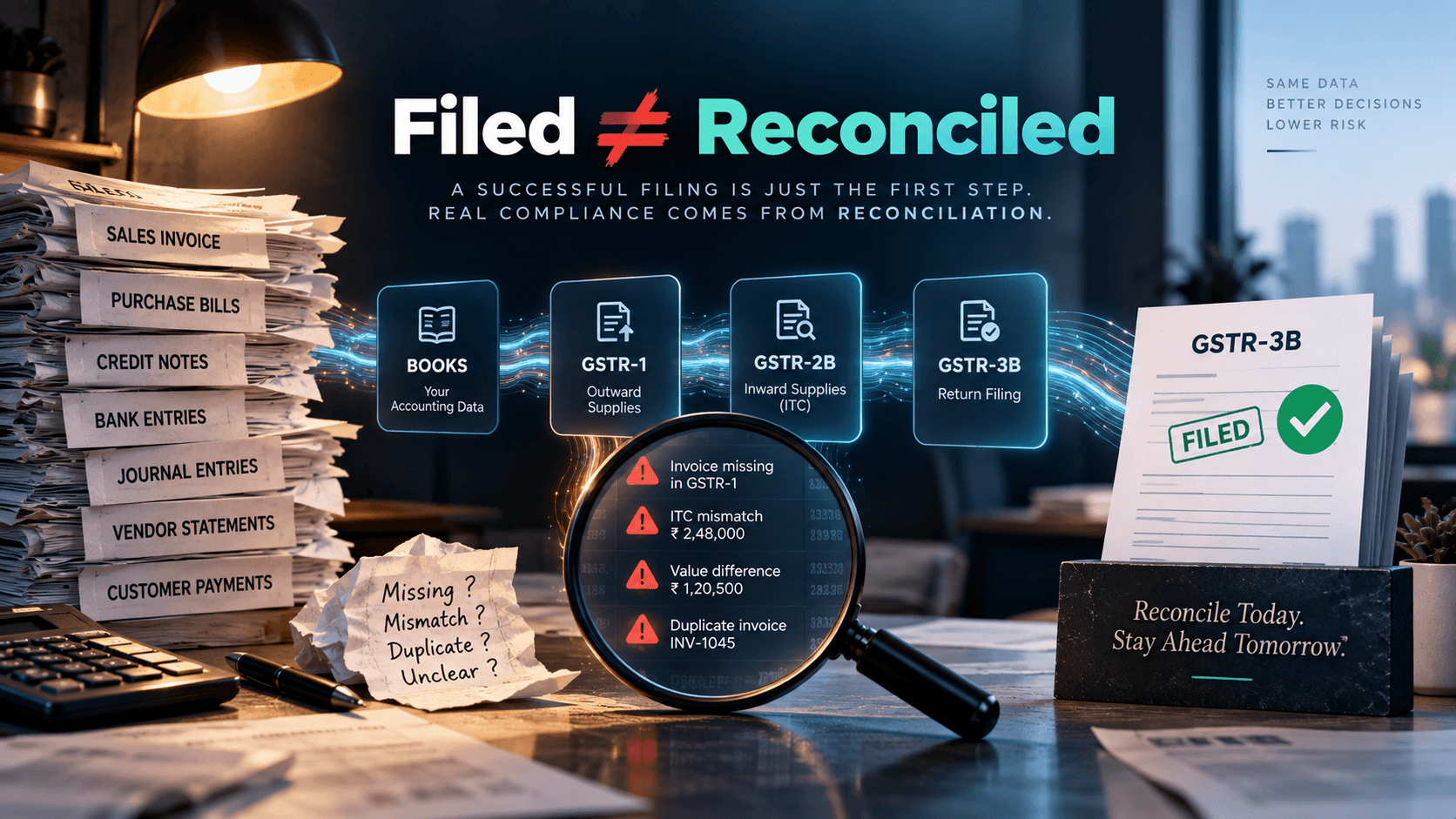
Filed Does Not Mean Reconciled
A GST return can be filed successfully and still contain unexplained differences.
Finance teams should ask:
Does GSTR-1 match the sales register? Does GSTR-2B match the purchase register? Is the ITC claimed in GSTR-3B properly supported? Can every material difference be explained?
Key takeaway:
Filing confirms submission. Reconciliation confirms confidence in the numbers. The GST Data Chain
GST compliance depends on connected financial data:
Books → GSTR-1 → GSTR-2B / IMS → GSTR-3B
A mismatch at any stage can affect:
Tax liability Input tax credit Working capital Audit readiness Compliance risk What Creates GST Mismatches?
Common reasons include:
Invoice missing from GSTR-1 Supplier invoice missing from GSTR-2B Incorrect GSTIN Wrong invoice value Duplicate invoice Credit note mismatch Timing difference Incorrect GST rate Transaction recorded in the wrong period
A mismatch is not always an error.
An unexplained mismatch is the real risk.
Why GSTR-2B Reconciliation Matters
Suppose:
ITC recorded in books: ₹10,00,000 ITC reflected in GSTR-2B: ₹9,40,000 Difference: ₹60,000
The important question is not simply how to remove the difference.
Finance should identify:
Which invoices created the ₹60,000 difference? Which suppliers are involved? Is the difference temporary? Is the ITC eligible? What action is required?
This turns reconciliation from matching numbers into financial intelligence.
GST Compliance Is Becoming Transaction-Level
With systems such as IMS, businesses increasingly need to review individual supplier records.
Finance teams need visibility over:
Accepted invoices Rejected invoices Pending invoices Missing invoices Value mismatches Credit-note adjustments
GST compliance is therefore moving beyond monthly totals toward invoice-level accuracy.
What a Better GST Dashboard Should Show
Instead of only:
GSTR-3B Status: Filed
A useful dashboard should show:
Total invoices processed Matched invoices Missing invoices Value mismatches ITC under review Unresolved exceptions Vendors creating recurring mismatches
Example:
1,248 invoices processed 1,180 matched 32 value mismatches 18 missing invoices ₹2.48 lakh ITC under review
That tells management far more than a green filing status.
From Filing to Financial Intelligence
Traditional process:
Prepare File Done
Better process:
Record Reconcile Identify Investigate Resolve File Monitor
The objective should not be to make two numbers look equal.
The objective should be to understand why they were different.
Final Takeaway GSTR-1 filed does not mean sales are fully reconciled. GSTR-2B available does not mean every ITC amount should be claimed. GSTR-3B filed does not mean the underlying data is automatically correct. Every material mismatch should have a reason and an action.
Filed tells you the return was submitted.